
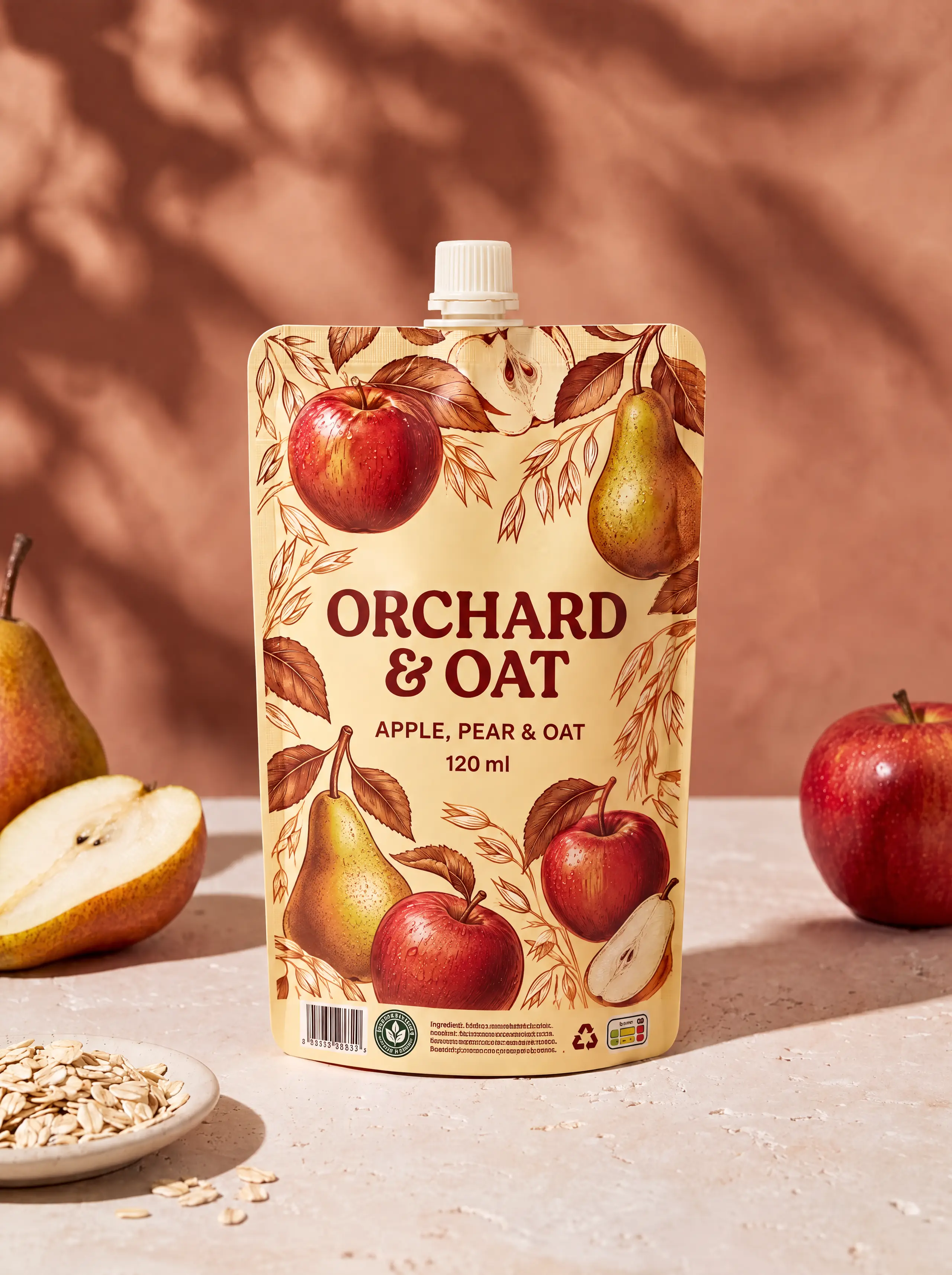
Spouted Pouch
The job of a bottle.
A fraction of the plastic.
About this format
The spout is chosen before the pouch is
Two things decide it. Position: a corner spout pours at an angle and suits thick product a child or cook squeezes out — purée, honey, sauce. A top spout sits centred, stands steady and decants cleanly into another bottle — juice, drinks, refills. Bore: thin liquids run through 8–10 mm; anything thicker than a light sauce wants 13 mm or more; creams and purées take 16–22 mm. Tell us the product and how someone empties it, and the spout and cap follow.
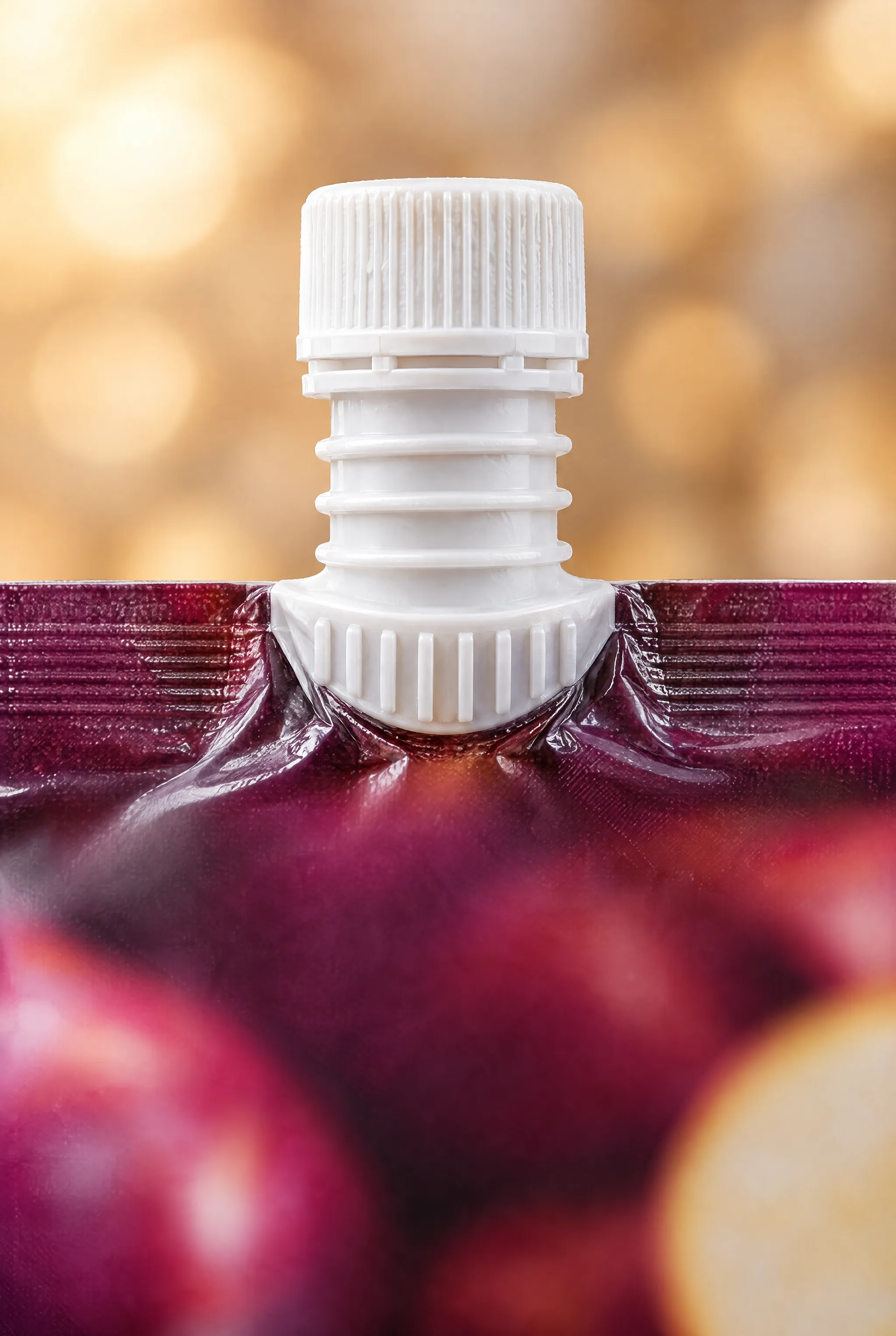
It has to survive the trip.
Every buyer, first meeting
The basics that get every team aligned
Tell us these nine things, get a quote within 1 business day
- 01
- What product
- 02
- Fill weight
- 03
- Product characteristics
- 04
- Pouch size
- 05
- Spec & thickness
- 06
- Order quantity
- 07
- Print colours
- 08
- Shelf life
- 09
- Filling method
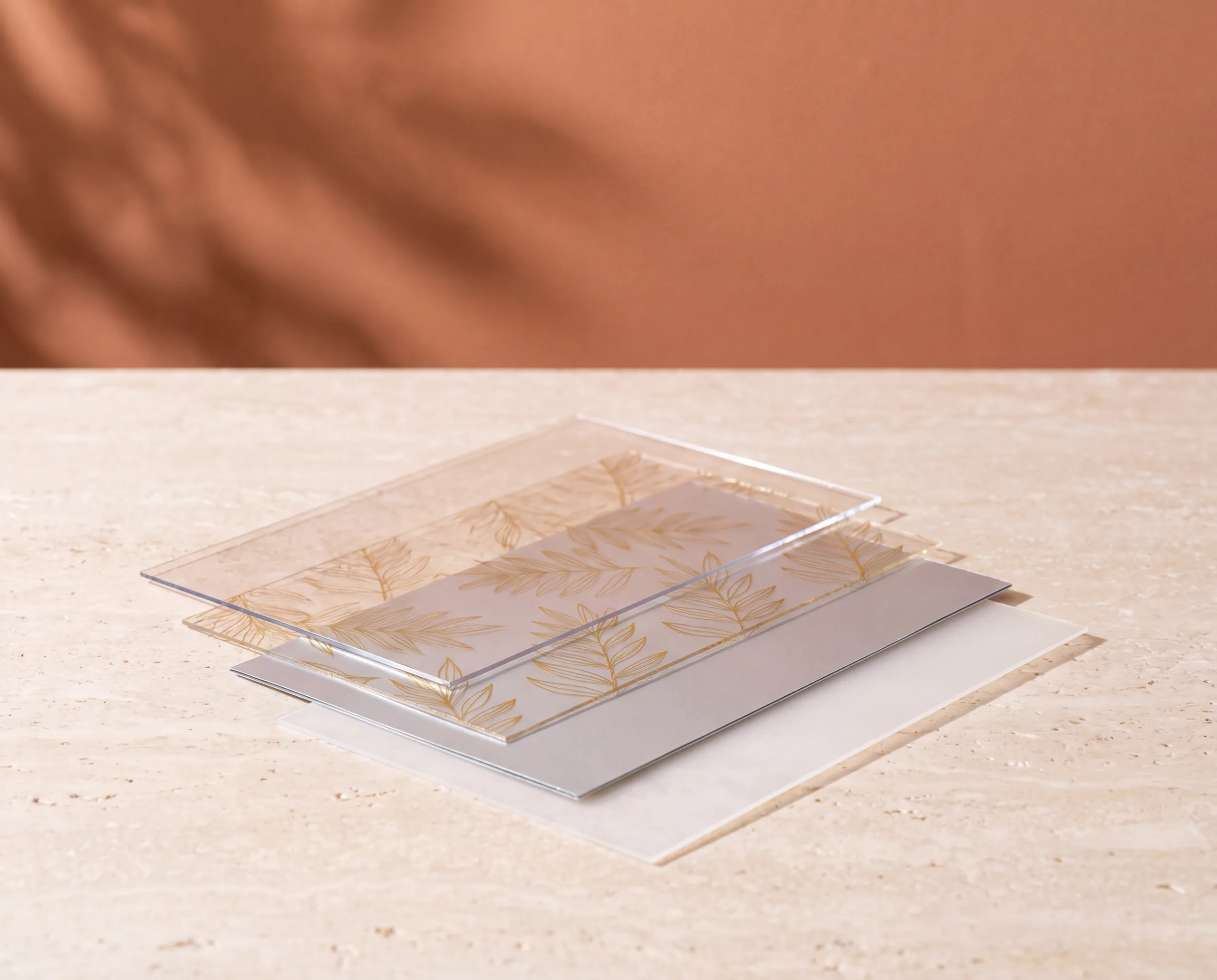
What it is made of
Who actually uses a spout
Four categories account for most spouted work, and each asks the film something different.
01
Baby food
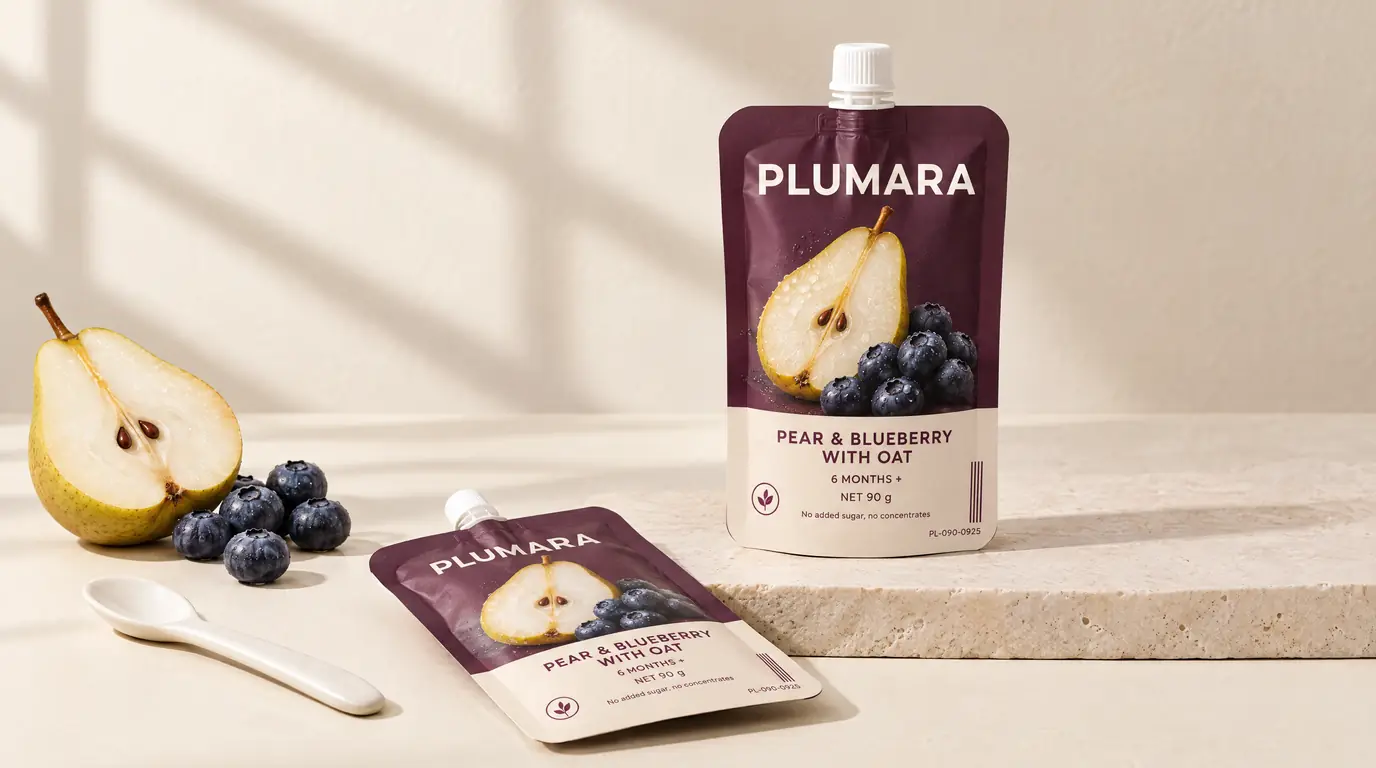
The least forgiving category we serve. Every layer is a food-contact decision, and the cap is anti-choke.
All
All industries
The rest of the categories we pack sit on the full list.
02
Sauces & ready meals
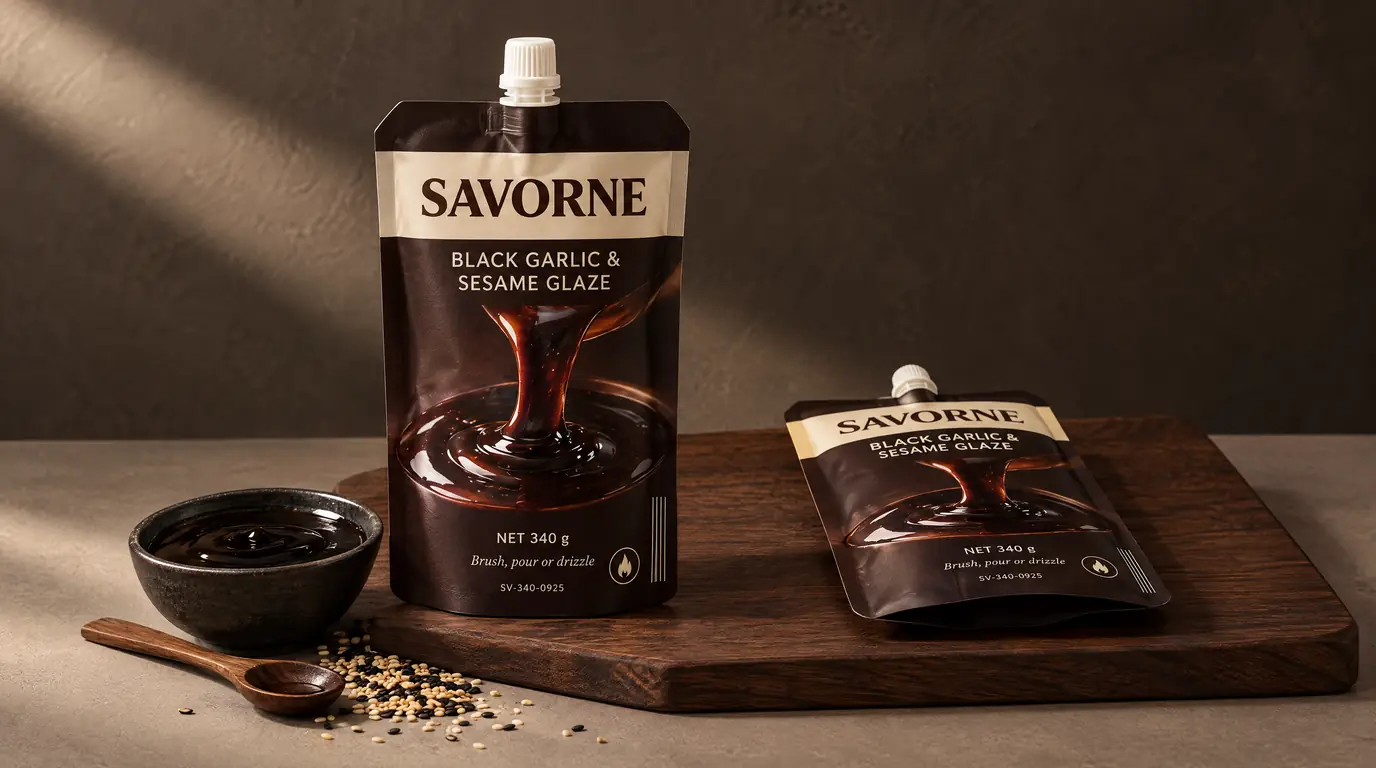
Wet, oily, acidic, often sterilised in the pack. The seal has to close through product.
03
Cosmetics & skincare
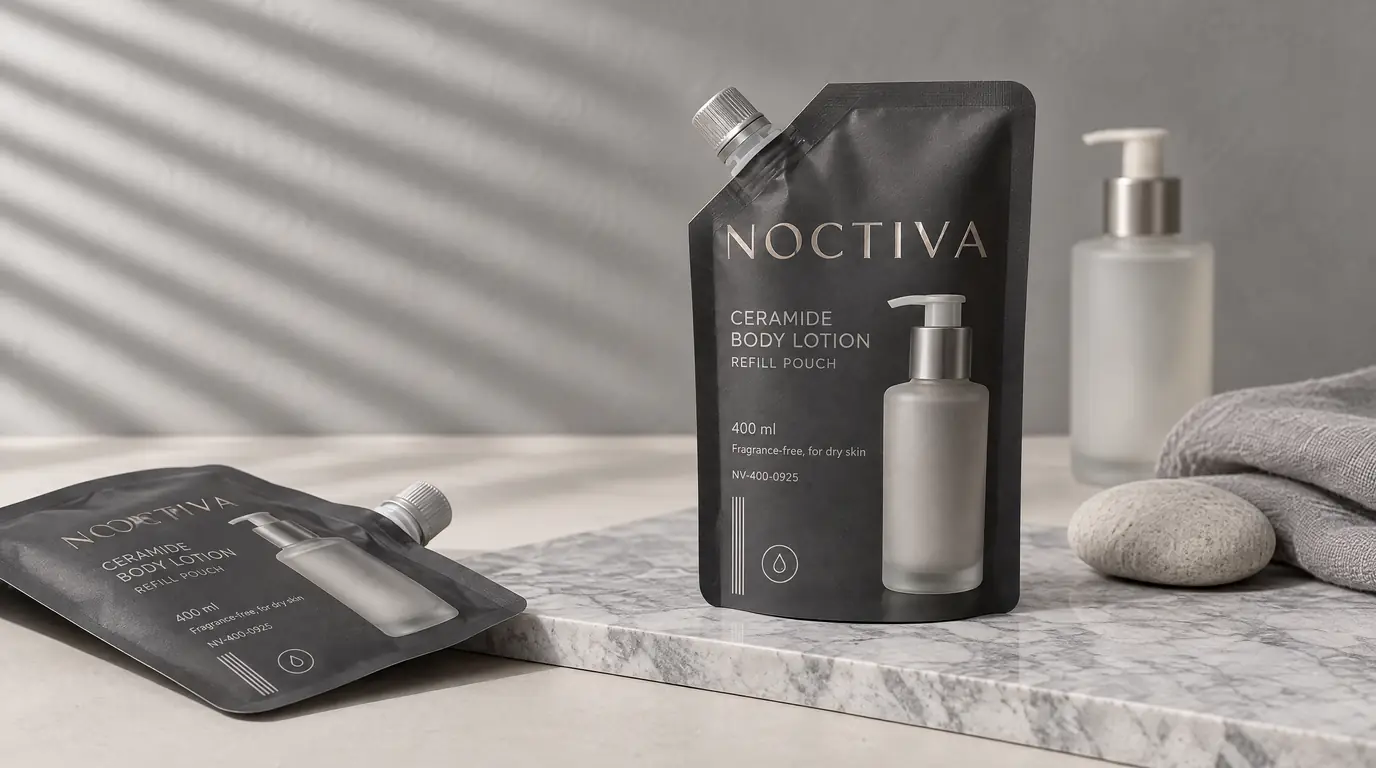
Judged on print first; the film still has to hold oils and fragrance in.
04
Coffee & tea
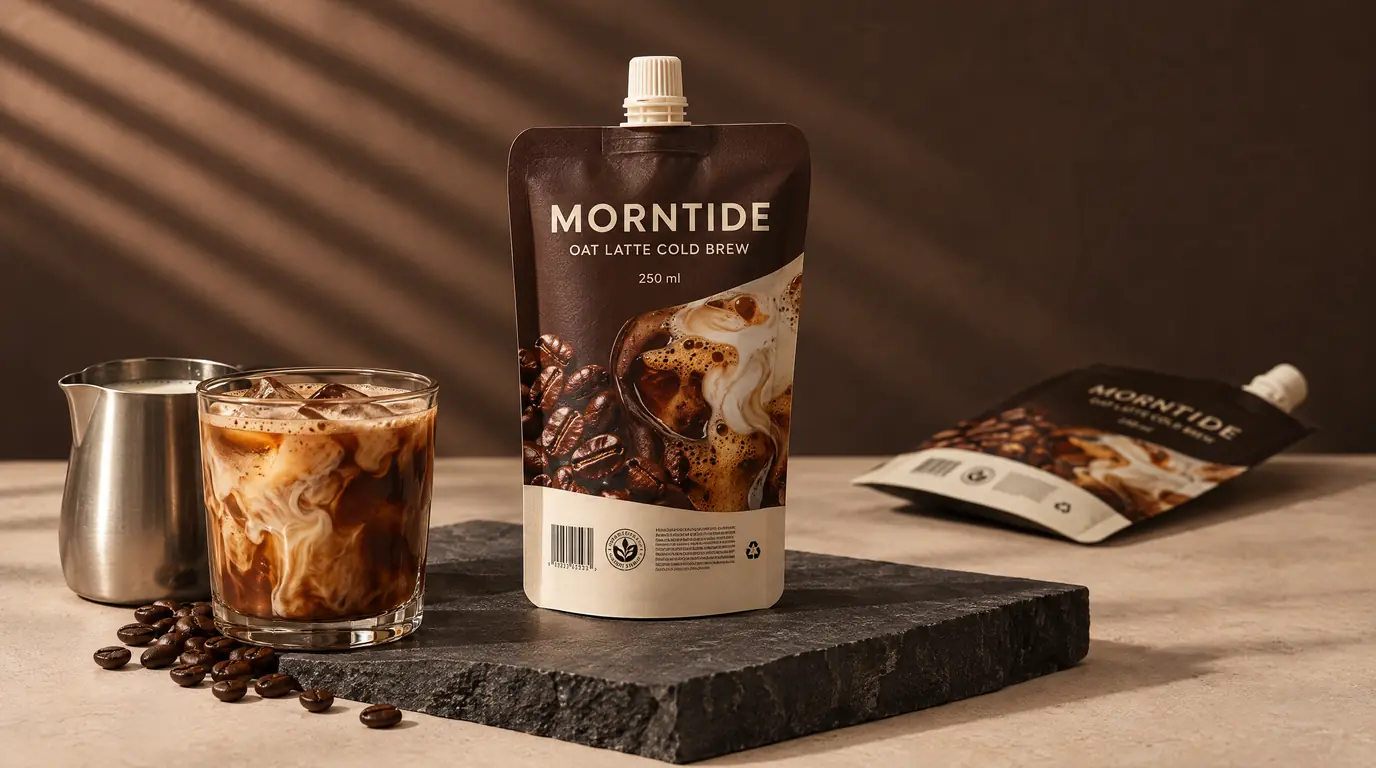
Beans give off gas for days; the film breathes one way and seals the other.
05
Pet food
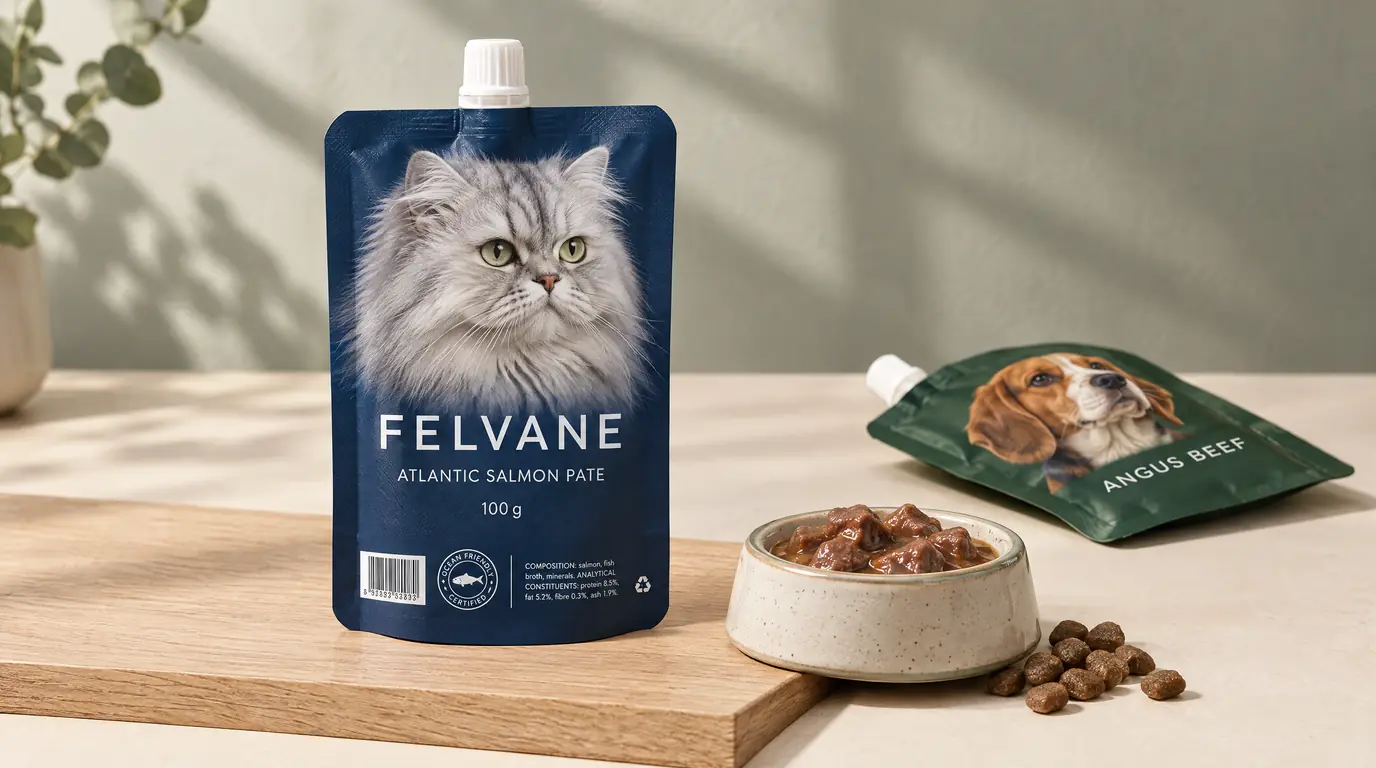
Fat and weight, in one pack. It has to hold the load and not let the oil through.
06
Pharma & supplements
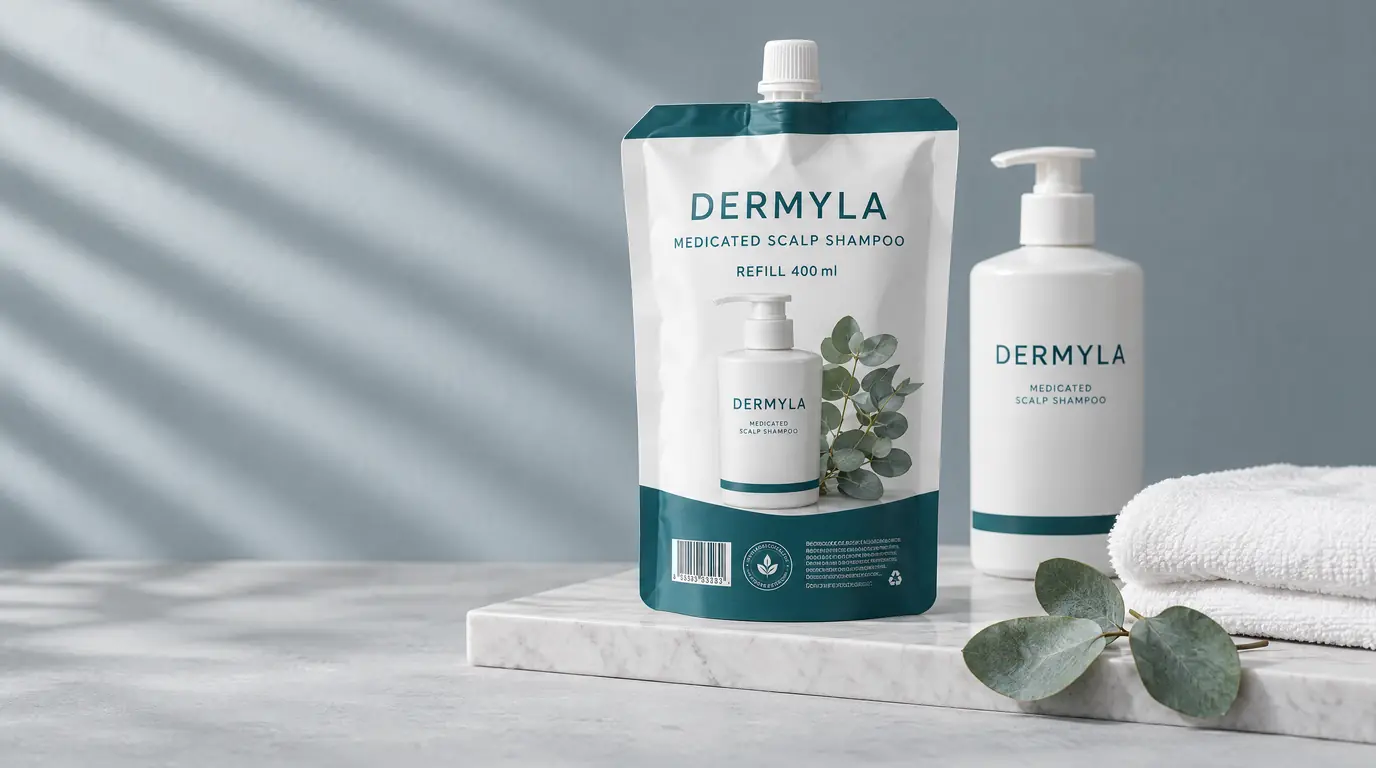
The pack is part of the stability file, and the structure answers to it.
07
Snacks & confectionery
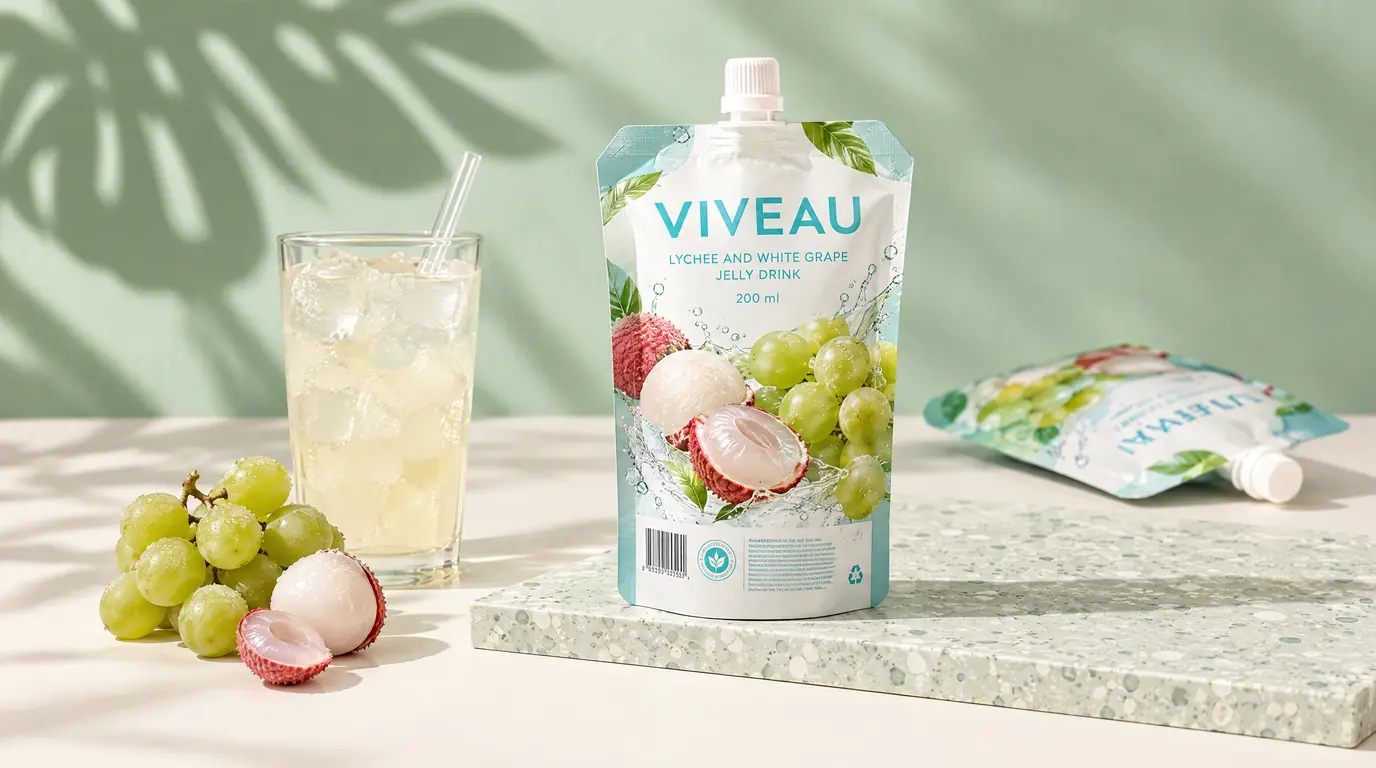
Speed and crispness. Filled on your line at rate, sealed against moisture and light.
Questions
What buyers ask before they order
- What can be fitted to the pouch?
Plain zipper, pocket zipper, one-way degassing valve for coffee, spout and cap, lipstick cap, die-cut shapes and carry handles, a clear window, matt or gloss varnish, and a clear front with an aluminium-foil back.
- Can we see a sample before the real run?
Yes. Once the quoted price is agreed we produce a sample for you to test, so both sides are sure before the line starts.
- How long does production take?
Counted from the purchase order and an approved paper proof: an ordinary film spec takes 20 to 45 days, and a repeat run takes 14 to 25 days. Reserving the material in advance can be quicker. A special spec takes 60 days or more, and we tell you which one yours is before you commit.
Contact
Send us the product, we will send back a structureSend us the product, we will send back a structure
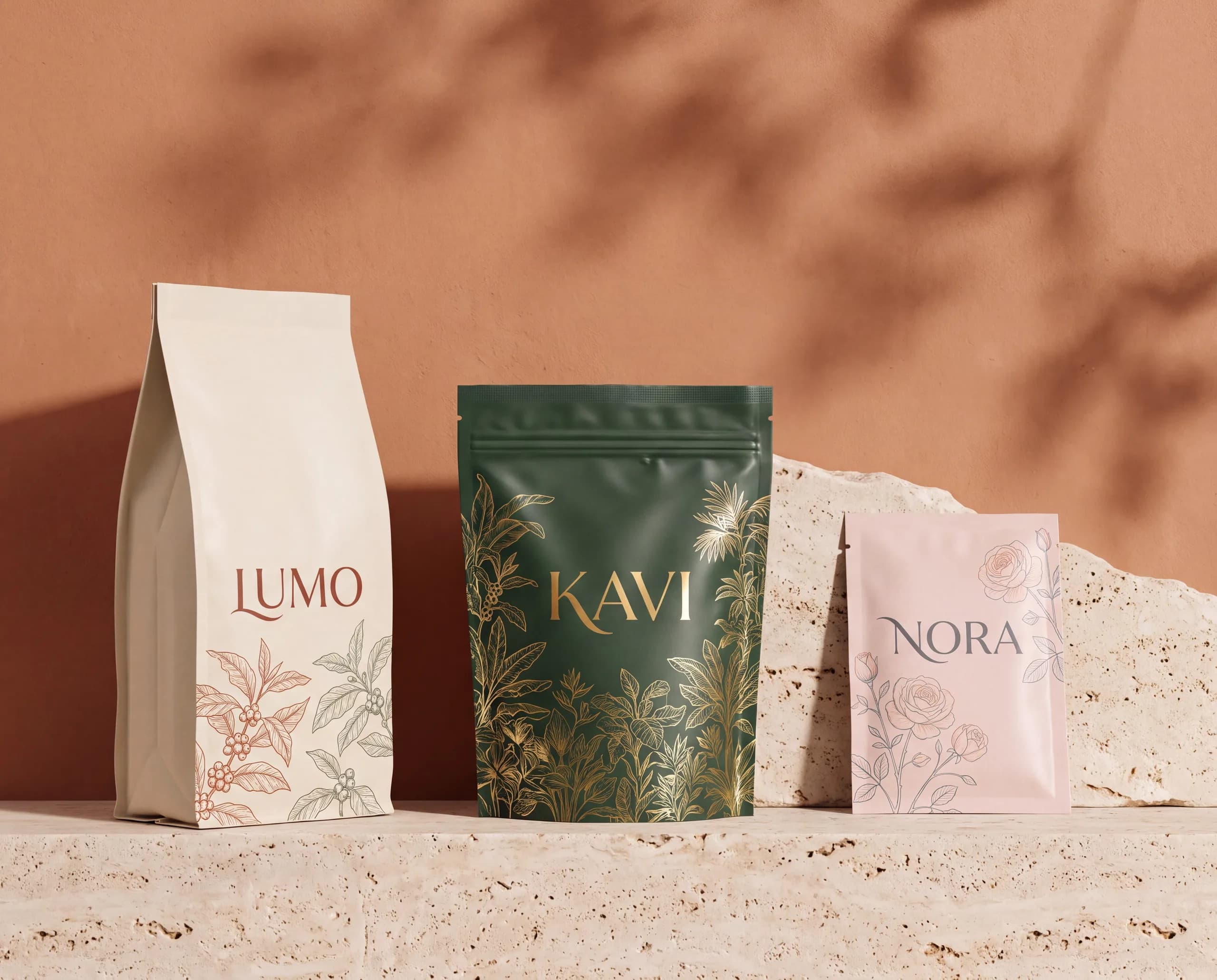
Tell us what goes inside, how long it has to last and how it gets filled.
Have these three ready and the first reply can be an answer
- What goes inside — the product itself, not the category
- How long it has to stay good on a shelf
- How it gets filled: by hand, or on your own machine
Already know the structure you need?
Build the spec yourselfGuides
How a spout actually gets into the pouch
The spout is not glued on afterwards. A dedicated insertion unit drops it into the open top while the pouch is still being formed, and the jaws weld the pouch wall around it in the same pass. Get the fitment's sealing surface or the sealing temperature wrong and it leaks there first.
What this shape is made of
The parts list, and what each part does.
Coming soonThe laminates it is built from
What each structure stops, and what it costs.
Coming soonWhere it sits in everything
One picture of the whole reference.
Open the map